
LinkedIn for Solopreneurs: A Playbook for Getting Started
Start treating LinkedIn like a business development engine

You've started a solo business. You know you can deliver for your clients. You understand that LinkedIn is a place to get clients, but you aren’t actually sure how.
For the vast majority of people, LinkedIn is the place where they go to attract potential employers for a 9-5 job. But your strategy has to change when you’re trying to get clients for your own business.
When decision-makers are looking for someone like you, they're on LinkedIn first. Success requires shifting from a "resume mindset" to a "landing page mindset," where your personal profile is part of what you’re selling.
Table of Contents
Why LinkedIn is a necessary platform for solopreneurs
In my business, the overwhelming majority of my clients come from LinkedIn. It is non-negotiable for B2B solopreneurs, as well as many other types of services (consulting, coaching, etc). Unlike other social platforms full of strangers shouting at each other, LinkedIn can quickly go from “looking at a profile” to “reaching out” to “forming a business relationship.”
That’s why it’s fundamentally different than other platforms. When someone's scrolling X/Twitter or Instagram, they're in entertainment mode. On LinkedIn, decision-makers are actively looking for solutions to work-related problems — and they're looking to hire people who can solve them.
Trust is an important factor on LinkedIn. Before anyone hires you, they want to know who you are, how you think about problems, and whether you're worth their time. Your profile and activity on LinkedIn answer all of these questions.
Make your profile work for you
When you work a 9-5 job, you need a resume that lists what you’ve done and what you’ve accomplished.
Solopreneurs move into the world of “portfolio” instead of “resume.” A resume lists what you've done. Your LinkedIn profile is an extension of your portfolio, and often the earliest entry point. Potential clients find you on LinkedIn first, and — if they like what they see — check out your online portfolio.
A profile sells what you can do — and more importantly, who benefits when you do it. With this in mind, you need to structure your LinkedIn profile well, to draw people in.
Headline
The headline is the most important real estate on your entire profile. It appears in the feed as people are scrolling. They may not ever click over to your full profile if your headline is unclear or confusing.
Your headline needs to be specific and client-focused. Instead of "Fintech Writer | Storyteller | Coffee Enthusiast" (which I actually had as my LinkedIn profile at one point) try something very clear like “Freelance B2B Fintech Writer" (exactly who you are) or “Helping fintech startups break down complex topics for their audience” (exactly what you do). The person reading this knows what problem you solve and whether that applies to them.
About
The About section is where you address client pain points directly. This is not a biography. It's a mini-pitch. Lead with the problem your ideal client faces, then show them how you think about solving it.
That being said, you should absolutely showcase your personality in your About section. It doesn’t have to be uptight or too matter-of-fact.
 Anna Burgess Yang
Featured section
The Featured section is often overlooked, but it’s incredibly important. This is where you can display your best work, like case studies, links to sample projects, or articles you’ve written.
When someone looks at your profile, they should see proof that you're capable of delivering whatever you’ve promised in your headline.
Do you need a LinkedIn Company Page?
Many solopreneurs also ask whether they need a company page. At a minimum, you can create a Company Page so that you can tie your profile to the Page, and it shows “Where you work.”
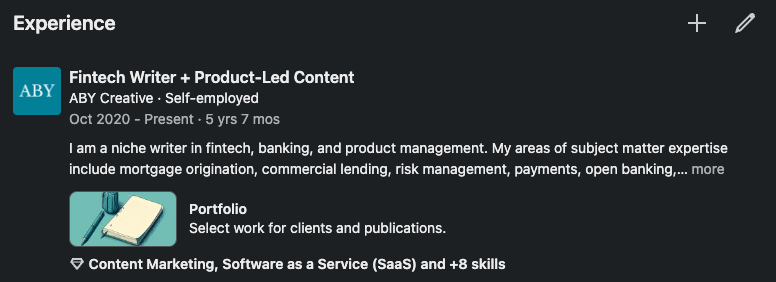
But you don’t need to do much with the Company Page, other than describe what services you offer. Focus on your main profile first, since that’s how people find you.
When you feel like you have the bandwidth, you can post to the Company Page. I share links to client work and client testimonials, no more than a few posts per month. The only reason I do this is so the page comes up in search, in addition to my profile. My Company Page is entirely self-promotional, whereas I keep “selling” to a minimum on my main profile (which I talk about in the next section).
But don't spend a ton of time maintaining a Company Page. Your personal profile is where inbound leads will find you.
Content Consistency Without Burnout
If you treat LinkedIn like a hamster wheel, you’ll burn out quickly.
Just like any social platform, consistency beats frequency. You don't need to post every day. I started with one thoughtful post per week, and then ramped up from there. Data from social media scheduling platform Buffer found that posting 2-5 times per week on LinkedIn is the “sweet spot.” If you’re just getting started, start with two.
You need to post regularly enough that when someone from your network lands on your profile, they see evidence that you're actively thinking about your craft.
Not sure what to post? Here’s how to start.
Value posts
Value posts demonstrate your expertise: real frameworks you use, lessons from your research, observations about your industry. People use the phrase “thought leadership.” I personally don’t like the term, but they’re the type of posts that show you've done the thinking, so potential clients trust that you know what you’re talking about.
If being a “thought leader” makes you uncomfortable, focus more on the “how” part of your work. Your processes for research, how you onboard new clients, or how you run your business all make good content.
Human-centric posts
Human-centric posts let people know who you are. These might include what you've learned from failures or how you’ve changed over your career. They build the "know, like, trust" factor because people are hiring you, not just your skills.
You could also bring in glimpses of your life outside of work. I’m a working mom, so I’ll occasionally say things like, “My day ended early because I needed to pick up my sick kid from school.” It keeps things real. But only share what you’re comfortable sharing.
Sales posts
Sales posts are rare. Constant posts of “Here’s why you should hire me!” can rub people the wrong way. You’re proving your value through other posts, not direct sales pitches.
Maybe do a few of these per month, depending on how actively you're trying to get new clients. An actual sales post sounds like this: "I'm taking on new clients in Q3" or "If you're building a SaaS product, DM me. I can help you with XYZ pain point."
3 steps for managing the LinkedIn outreach process
This is where most solopreneurs stop short of turning a potential lead into a real lead. They're either not reaching out at all, or they're reaching out to cold contacts (via DM) with a hard sell.
Here’s the process for turning LinkedIn engagement into actual conversations.
1. Message people who engage with your content
Start with people who are already engaging with your content. If someone comments on your post, that's telling you that the person is interested in what you have to say.
Reply back to a comment and thank them. Then check out their profile.
- Do they look like someone you'd enjoy working with?
- Are they in your target industry?
If yes, send them a connection request with a brief personal note referencing the comment they made. This is the first part of forming a warm connection.
2. Never pitch-slap a new connection
Do not — I repeat — do not ever immediately pitch someone after they connect. It’s still a cold pitch. People’s DMs are so full of cold pitches that they’ll ignore you (or block you if they’re really irritated).
You’ll be far more successful with a warm pitch, but you need to build some trust first. Engage with their content for a few days or weeks. Comment on their posts. Start a genuine conversation in the DMs, asking about the type of work they do.
If they post about a company milestone or hiring, that's an even better signal. They might need the exact service you provide. That's your opening.
3. Move from DM to discovery call
You still need to tread lightly when you finally get to the pitch, so you don’t damage the trust you’ve built. Frame it as a question, like "Your recent post about content strategy caught my attention. How are you thinking about XYZ topic?"
The goal is to move from DM to a discovery call to see if there's a mutual fit. People respond to people they recognize. If they've been following your work or engaging with your content, they already know your name. That's the advantage of spending time building your presence.
The solopreneur's LinkedIn toolkit
Building momentum on LinkedIn doesn't mean spending every waking hour on the platform. These tools help you stay consistent without feeling overwhelmed
- Scheduling tools (Buffer, Later, Hootsuite): Write and schedule posts in batches. Spend an hour on content creation, then let the tool distribute it throughout the week.
- LinkedIn analytics (Native analytics, Taplio, Shield): Track which posts get engagement. Post more of the formats that are working well.
- CRM-lite tools: Keep a simple database of LinkedIn connections: names, context (how you know them), conversation history, and next steps.
Moving Beyond the LinkedIn Feed
At some point, your LinkedIn “sales engine” starts to run more smoothly. You'll get consistent inbound inquiries. People recognize your name and may even recommend you. That's the point at which you can branch out into other channels.
And you don’t have to start from scratch. LinkedIn posts can easily become a newsletter or a blog post. You can repurpose ideas into Threads posts or even TikTok if that's where your audience is.
Don't chase every platform. But once you've proven something works on LinkedIn, see if you can find other channels where your potential customers spend their time.
Learn how to find content inspiration in everyday life.
FAQs
Should I post about personal topics on LinkedIn or stick to business?
Stick mostly to business with light personal context. If you're sharing a parenting challenge, for example, connect it to a lesson that applies to your work. You're building credibility, not a personal diary. That being said, a bit of personality is what creates the "like" and "trust" factors alongside your expertise.
How do I know if someone is worth connecting with on LinkedIn?
Look a: Do they work at companies that need your services? Are they in your target industry? Do they seem like they'd be interesting to know? That being said, there’s no harm in connecting — but don’t spend time going down a path of a lenghty DM conversation if it won’t serve your business.
Can I automate my LinkedIn messages?
LinkedIn has rules against that. Automation triggers detection and can get you shadowbanned. Your DMs should always be personal and manual. That takes time, which is the point — you're making a genuine effort to build relationships.
What if I pitch someone on LinkedIn without the warm-up?
Odds are, you’ll get ignored and it will waste your time and damage the potential relationship. People are busy and protective of their time. Many won’t engage with someone who skipped the relationship-building step.