How to Build a Portfolio Career
Your career is a collection of experiences, not a ladder to climb.

You've spent years building skills. Earning experience and respect. Working your way up the corporate ladder. And suddenly… it doesn't feel like your career is going anywhere.
Whether your industry is shifting or you've just hit a ceiling at your current job, you feel like it’s time for a change. That’s the point I reached in 2021, when I quit a 15-year career at a tech company to pursue content marketing and journalism.
The traditional way of looking at a career is a list on a resume. It’s the idea that your career should read as a single, straight story that moves in one direction (up).
A portfolio career takes a different perspective. Instead of looking at a career like a ladder going up, a portfolio career moves wide. You gather experiences, and it gives you more control over where you’re headed.
What is a portfolio career?
A portfolio career is a professional approach where you intentionally draw from multiple skills, experiences, and sometimes income streams — rather than following a single linear career path.
Portfolio career strategist Maggie Blackburn describes it this way:
You can think of a portfolio career like a pie. Every slice is a different interest, income stream, or project.
Career changes are more common than ever, and technology keeps reshaping entire industries. A portfolio career mindset means you're always adding to your collection. You might take on new roles, side projects, or intentionally develop new skills. When there’s major upheaval (like AI), you’re more prepared to adapt. Your career is more resilient, even if part of your path is disrupted.
Read my interview with Maggie Blackburn: From burnout to breakthrough
4 steps to build a portfolio career
Building a portfolio career doesn't happen by accident. It takes a deliberate approach to how you think about your skills and the way you present yourself professionally.
Here are a few ways to start reshaping your career around a portfolio, not a resume.
1. Recognize that careers are no longer linear
The career ladder has disappeared in part because entire industries have to reinvent themselves. Print journalism, for example, has now shifted to digital media (and now who knows what will happen with Google Search). Software engineers have to keep up with nonstop AI evolutions. These massive shifts have led to a rethinking of work.
Because of this, everyone needs to amass a career portfolio. Words like "career pivots" and "upskilling" are now a regular part of the conversation. It’s the only way to protect yourself.
Roles that seemed stable a few years ago are changing fast — and the people who keep up are the ones who never stopped learning. Burying your head in the sand or hand-wringing about changes will not work.
When you have a portfolio mindset, career rejection becomes redirection. One door closes, another opens, as the saying goes.
2. Show your capacity for continuous learning
You'll never walk into a job with the exact skills you need on Day 1. One of the greatest assets you can have is your ability to learn.
I found myself in this situation when I quit my job in 2021. I had been with a company for 15 years, and my career had stagnated. I knew my skills were not on par with the minimum requirements for similar roles.
I decided to pursue a career pivot, becoming a fintech writer for B2B SaaS companies. I also realized that by diversifying my income, I could better amass new skills and take more control.
My path from tech executive to professional writer is a good example of how portfolio thinking works in practice. I brought some baseline skills from my prior career — like managing stakeholders and understanding complex products — but I also had to learn entirely new skills. I took online courses about SEO and took every opportunity I could to learn. Now, I also spend a lot of time learning how to effectively use AI.
3. Explain the value of your portfolio of skills
Many hiring managers or potential clients are on the lookout for adaptive, out-of-the-box thinkers. But you have to help them know that you are one of those people.
I found an approach that works — using my initial communication to "connect the dots.”
Example:
It sounds like you are looking for someone who can do X. I have experience with X by doing Y, which achieved Z result.
The people reviewing your application or considering you for a project aren't going to connect the dots between your portfolio of skills and their current needs on their own. You have to do that work for them. Think of it this way: you’re speaking to a new audience, whether it’s an employer in a different industry or a potential client.
 Anna Burgess Yang
4. Stay the course
Many companies are rethinking how they hire. They're less concerned with resume gaps and non-linear career paths. The creator economy and opportunities for solopreneurs have exploded.
There is room to grow in so many different directions. By creating your career portfolio and filling it with experiences, you'll set yourself up for more success. You’ll probably also find it more personally satisfying because you get to pursue several different interests.
Not every pivot goes smoothly, and it’s important to acknowledge that. After I pivoted to a new career and began building my portfolio of skills, I was laid off 18 months later.
Knowing how to recover from career setbacks — a layoff, a failed side project, a client relationship that didn't work out — is itself a portfolio skill. You’ve got to take that experience and ask yourself, “Ok, what comes next? Do I find something with the skills I’ve got, or do I try something new?”
Your career is yours to design
The most valuable thing about a portfolio career is that it gives you options. You're never locked into a single path, and every experience — even the ones that didn't go as planned — adds something to what you bring to the table.
These days, I can proudly say that I’m a fintech writer who creates resources for fellow solopreneurs based on my experiences as a tech executive. That combination is uniquely me.
You don't have to have it all figured out right now. Start with one step: decide that you’re going to learn something new or your own. Or think about how to reframe a skill you already have, or practice connecting the dots between where you've been and where you want to go.
The skills you gather in your portfolio career should make sense for you: your goals, your passions, and what you’d like to pursue.
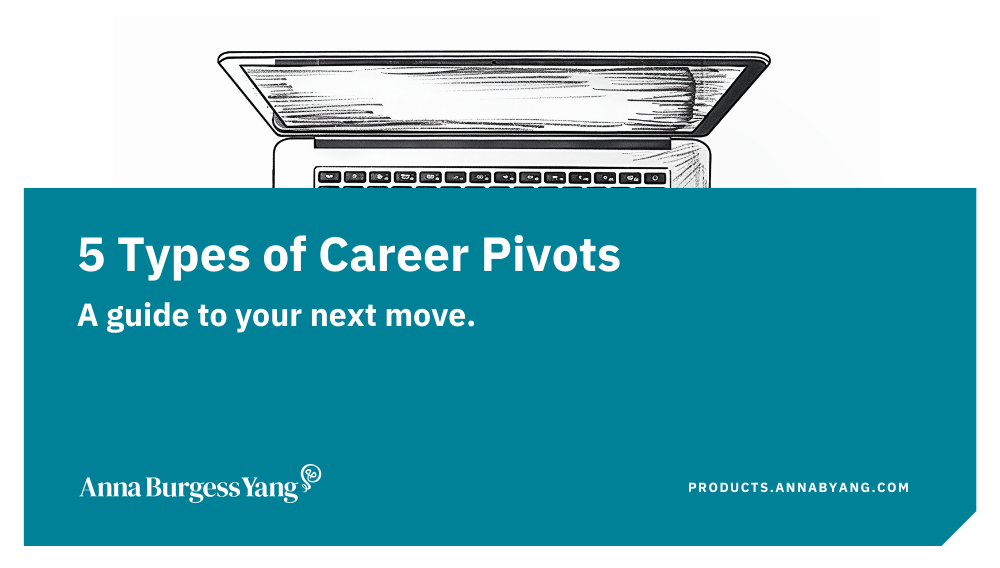
Thinking about a career change? Check out this free guide.
Common mistakes when building a portfolio career
- Trying to pivot everything at once. A portfolio career is built over time, not overnight. Start by adding one new skill or experience while maintaining the parts of your career that are already working.
- Not documenting transferable skills. If you can't articulate how your existing experience applies to a new context, you'll undersell yourself every time. Practice connecting the dots of your portfolio skills.
- Comparing your timeline to someone else's. Career transitions look different for everyone. Someone else's two-year pivot doesn't set the standard for yours.
- Treating every career change as starting over. The whole point of a portfolio is that nothing is wasted. Every role, project, and skill adds something, even if the connection isn't obvious yet.
- Staying in your comfort zone. A portfolio career requires getting comfortable with being a beginner again. If every new role or skill looks the same, you're not really building a portfolio.
FAQs
What is a portfolio career?
A portfolio career is a professional approach where you draw from multiple skills, experiences, and sometimes income streams rather than following a single linear career path. You prioritize adaptability and diverse experiences over climbing a single ladder.
How do I start building a portfolio career?
Start by taking stock of the skills you already have. Identify what you want to learn next. You don't need to quit your job — begin with a side project, a course, or a new responsibility that stretches you in a different direction.
Is a portfolio career the same as freelancing?
Not necessarily. Freelancing is one form a portfolio career can take, especially since you can freelance alongside a 9-5 job before making a leap into something totally new. But portfolio careers also include people who hold traditional jobs while building skills in different areas, or people who combine part-time roles with creative projects or consulting.
How do I explain a non-linear career to employers?
Focus on connecting the dots. Say something like: "You're looking for someone who can do X. I have experience with X through doing Y, which achieved Z result." Many hiring managers value adaptability. You just have to help them see how your diverse experiences are an asset.
What are the risks of a portfolio career?
The biggest risk is spreading yourself too thin without going deep enough in any one area. Be intentional about which skills and experiences you add to your portfolio rather than saying yes to everything.